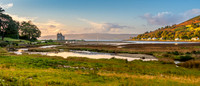
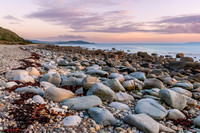
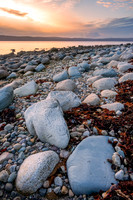
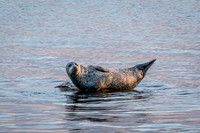
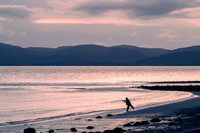
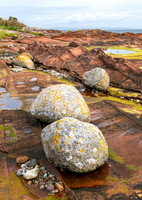
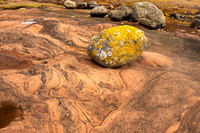
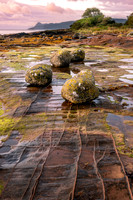
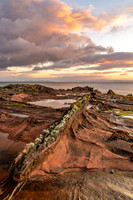
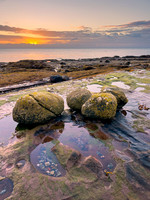
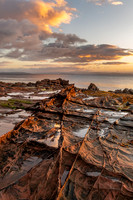
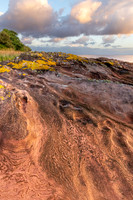
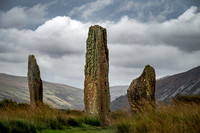
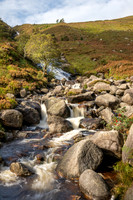
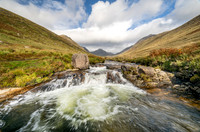
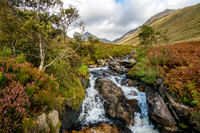
The Island of Arran is Scotland’s seventh largest island and is often described as ‘Scotland in miniature.’ It sits right at the end of the Firth of Clyde, sheltered from the Irish Sea by the Mull of Kintyre. Like the mainland the island is divided into highland and lowland areas by the great Highland boundary fault. Arran has been continuously inhabited since the early Neolithic period and is rich in antiquities; there are numerous standing stones dating from prehistoric times, including six stone circles on Machrie Moor. For a long time Arran was part of the Viking Kingdom but became part of Scotland in the 13th Century. The highland clearances and over-fishing of the waters around the island led to widespread de-population but today it is immensely popular as a holiday destination, especially for visitors from nearby Glasgow. The island includes miles of coastal pathways, numerous hills and mountains, forested areas, rivers, small lochs and beaches. There is considerable diversity of wildlife, including three species of tree endemic to the area.
© Gigi & Robin Williams Photography